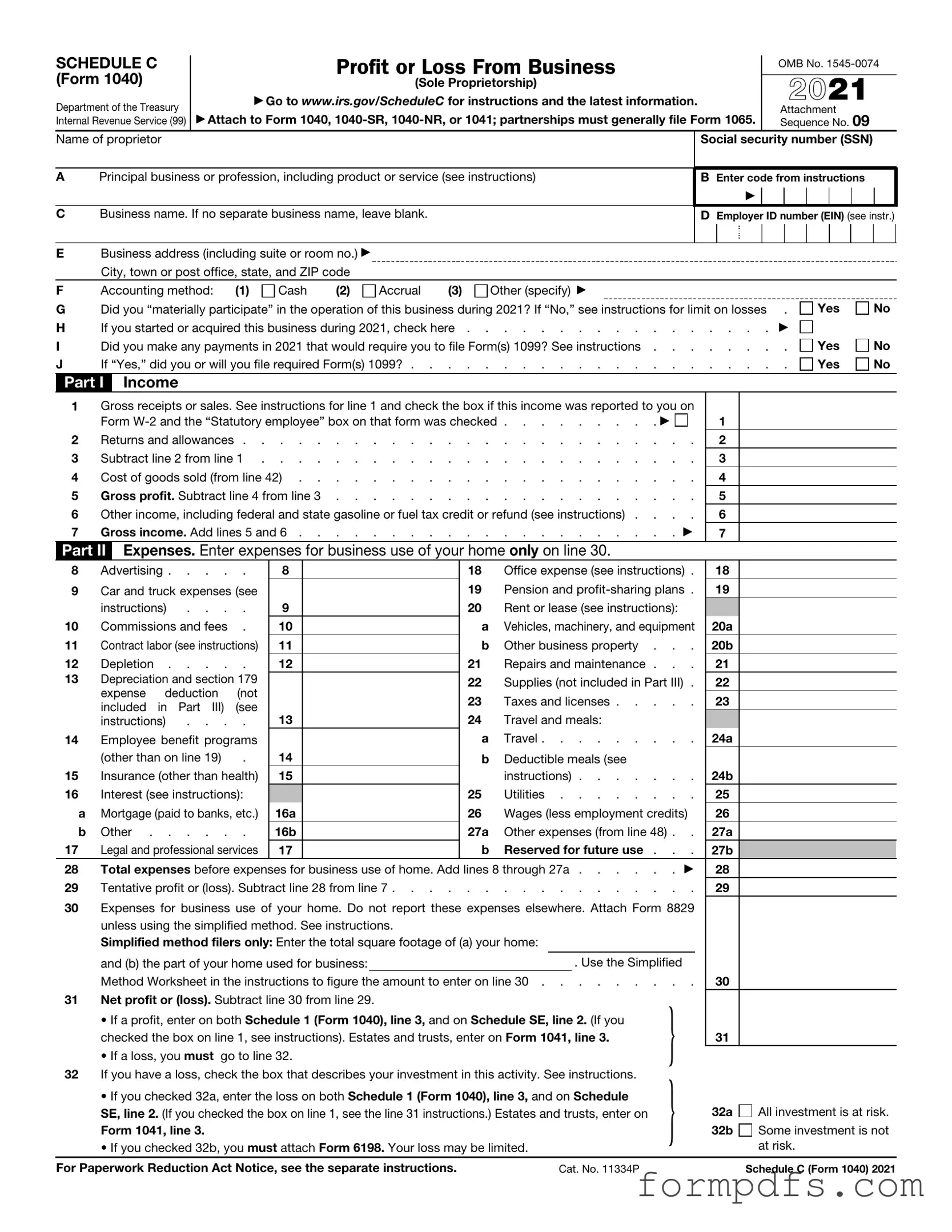
Blank IRS Schedule C 1040 PDF Form
The IRS Schedule C 1040 form plays a crucial role for individuals who operate their own businesses as sole proprietors. This form provides a structured way to report income and expenses related to self-employment, allowing business owners to accurately calculate their net profit or loss for the year. By detailing various income streams, such as sales and services, and listing allowable deductions, including costs for supplies, advertising, and even home office expenses, the Schedule C helps ensure that entrepreneurs comply with tax regulations while maximizing their potential deductions. Additionally, the form includes sections for reporting vehicle expenses and other specific costs associated with running a business, making it an essential tool for anyone looking to navigate the complexities of self-employment taxes. Understanding how to fill out this form correctly can lead to significant tax savings and a clearer picture of one's business financial health.
More PDF Templates
Is It Too Late to Get My Cat Vaccinated - Use this document to support your dog’s wellness with clear vaccination evidence.
Imm1294e - Verification of identity may require sharing information with law enforcement if necessary.
Completing the USCIS I-864 form is an essential step in the immigration journey, as it not only affirms the sponsor's commitment to support the applicant but also showcases the financial backing that is vital for the approval process. For more detailed information about this important document, you can visit OnlineLawDocs.com, which offers valuable resources to help navigate the complexities of the I-864 form.
Lease Agreement Florida Template - The lease covers mobile homes, condominiums, or cooperatives.
Documents used along the form
When filing your taxes as a sole proprietor, the IRS Schedule C (Form 1040) is essential. However, there are several other forms and documents that you may need to complete your tax return accurately. Below is a list of these important documents.
- Form 1040: This is the standard individual income tax return form used by U.S. taxpayers. It summarizes your income, deductions, and tax liability.
- Lease Agreement: It is important to use a comprehensive https://smarttemplates.net/fillable-lease-agreement form to ensure all terms and conditions are clearly outlined between landlords and tenants.
- Schedule SE: This form is used to calculate self-employment tax. If you earn income from self-employment, you must file this form to determine how much you owe.
- Form 4562: This document is used to report depreciation and amortization. If you have significant business assets, you’ll need this form to claim deductions for wear and tear.
- Form 8829: If you use part of your home for business, this form allows you to deduct home office expenses. It helps you calculate the allowable deductions based on the space you use for business.
- Form W-2: If you also have income from employment, your employer provides this form. It shows your wages and the taxes withheld, which you need to report on your tax return.
Gathering these documents will help ensure a smooth tax filing process. Each form serves a specific purpose and can significantly impact your overall tax situation. Make sure to review them carefully to maximize your deductions and comply with IRS requirements.
Form Breakdown
| Fact Name | Description |
|---|---|
| Purpose | The IRS Schedule C (Form 1040) is used by sole proprietors to report income and expenses from their business activities. |
| Filing Deadline | Schedule C must be filed by the tax return deadline, typically April 15th, unless an extension is requested. |
| State-Specific Forms | Some states require additional forms for reporting business income. For example, California requires Form 540 and follows the California Revenue and Taxation Code. |
| Deductible Expenses | Business expenses such as advertising, utilities, and office supplies can be deducted to reduce taxable income. |
More About IRS Schedule C 1040
What is IRS Schedule C (Form 1040)?
IRS Schedule C is a form used by sole proprietors to report income or loss from their business. It is an attachment to Form 1040, the individual income tax return. This form allows individuals to detail their business earnings, expenses, and net profit or loss. Completing Schedule C is essential for accurately reporting income generated from self-employment, ensuring compliance with tax regulations, and determining the amount of self-employment tax owed.
Who needs to file Schedule C?
Individuals who operate a business as a sole proprietor are required to file Schedule C. If you earn income from freelance work, consulting, or any other self-employment activities, you must report that income using this form. Even if your business operates at a loss, filing Schedule C is necessary to claim that loss against other income, which may reduce your overall tax liability.
What information do I need to complete Schedule C?
To complete Schedule C, gather several pieces of information. You will need to report your business income, which includes all revenue received from your business activities. Additionally, you must provide details about your business expenses, which can include costs like supplies, advertising, and travel. Other necessary information includes your business name, address, and the type of business you operate. Keeping thorough records throughout the year will make this process smoother.
How do I calculate my net profit or loss on Schedule C?
To calculate your net profit or loss, start by adding up all your business income. Then, subtract your total business expenses from this income. If your expenses exceed your income, you will report a net loss. Conversely, if your income is greater than your expenses, you will have a net profit. This figure is crucial as it determines how much tax you may owe or if you can claim a loss to offset other income.
Are there any common mistakes to avoid when filling out Schedule C?
Yes, several common mistakes can occur when filling out Schedule C. One frequent error is misreporting income or expenses, which can lead to incorrect tax calculations. Another mistake is failing to keep adequate records, which can make it challenging to substantiate claims during an audit. Additionally, many overlook the importance of distinguishing between personal and business expenses. Ensuring that you accurately categorize expenses can help avoid issues with the IRS.
IRS Schedule C 1040: Usage Steps
Completing the IRS Schedule C (Form 1040) is an important step for self-employed individuals and small business owners. This form allows you to report income and expenses related to your business. To ensure accuracy and compliance, follow these steps carefully.
- Start by downloading the Schedule C form from the IRS website or obtain a physical copy.
- Fill in your name and Social Security number at the top of the form.
- Provide the name of your business, if applicable, and the business address. If you operate from home, you can use your home address.
- Indicate your business activity by selecting the appropriate category from the list provided on the form.
- Report your gross receipts or sales. This is the total amount of money your business earned before any expenses.
- Deduct any returns and allowances from your gross receipts to calculate your net income.
- List your business expenses in the appropriate sections. Common categories include advertising, car and truck expenses, and office supplies.
- Sum up your total expenses and subtract this amount from your gross income to determine your net profit or loss.
- Complete the section regarding cost of goods sold if applicable. This includes inventory and direct costs related to the production of your products.
- Review the entire form for accuracy. Ensure all calculations are correct and all necessary information is provided.
- Sign and date the form before submitting it with your tax return.
After completing the Schedule C, it's essential to keep a copy for your records. This documentation will be useful for future reference, especially if the IRS has questions about your business income or expenses. Additionally, consider consulting a tax professional if you have any uncertainties about your entries or the implications of your reported income.